
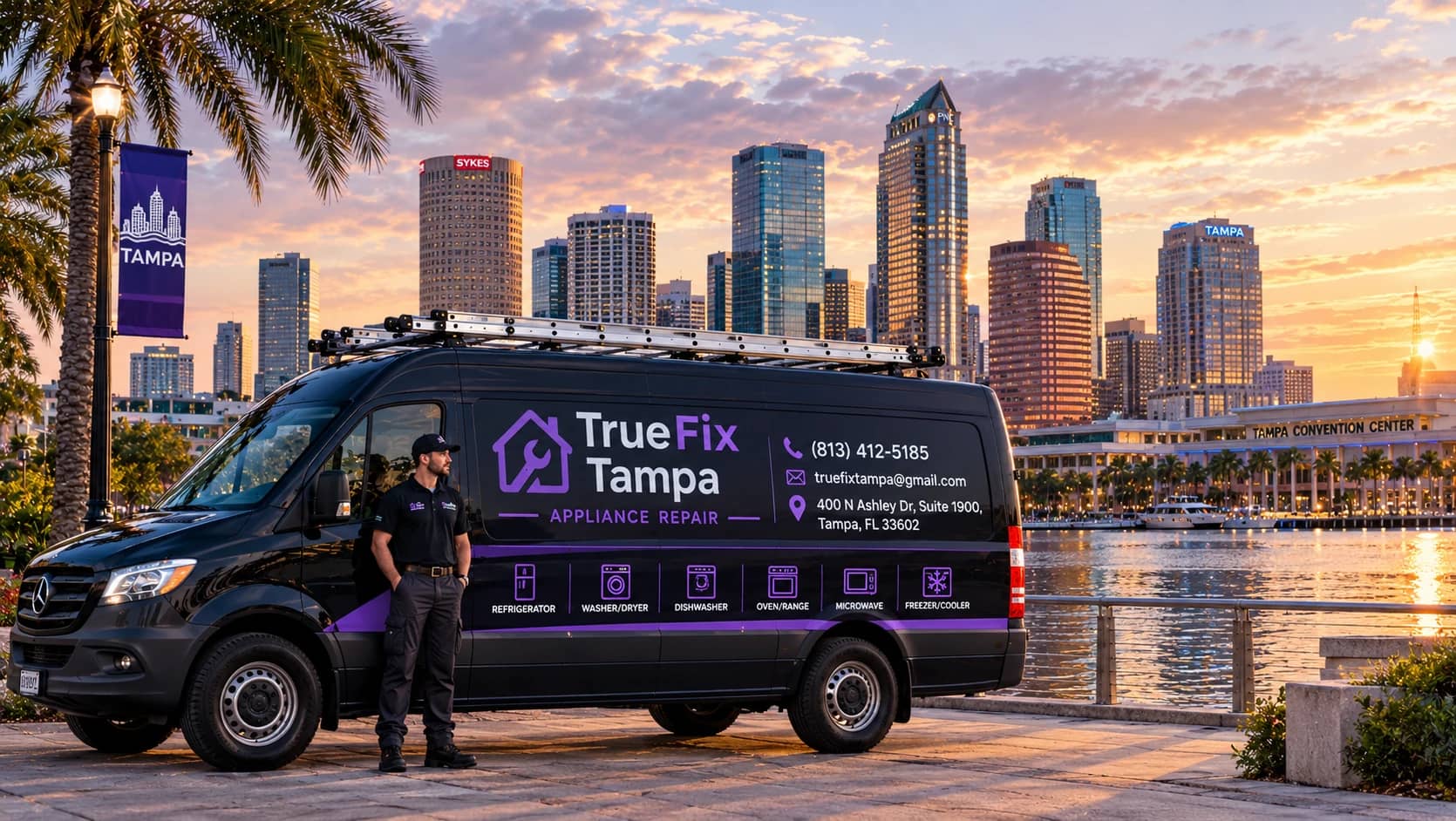
South Tampa is the peninsula between Hillsborough Bay and Old Tampa Bay, running from Hyde Park and Davis Islands down through Palma Ceia, Ballast Point and Port Tampa to the edge of MacDill Air Force Base. It is all inside the City of Tampa, and it covers the 33606, 33609, 33629, 33611 and 33616 ZIP codes, all part of our Tampa service area.
It's also one of the most varied parts of the county to work in. A single afternoon can include a bungalow from the early 1900s, a 1920s Mediterranean house on Davis Islands, a recently built two-story home on a narrow lot and a condo tower on Bayshore Boulevard. Each one changes how a repair visit goes.
The housing, neighborhood by neighborhood
Hyde Park and the 33606 area
Hyde Park dates to the 1880s and is known for its historic homes and bungalows. Older kitchens here were laid out for smaller appliances than people buy today. When a modern refrigerator or a deeper dishwasher is squeezed into an opening built decades ago, ventilation suffers. A refrigerator boxed in by cabinets and walls on all sides has less room to shed heat, and that shows up as a unit that runs constantly or struggles in summer.
Davis Islands was dredged and built in the 1920s, with Mediterranean-style homes alongside many newer ones. Tampa General Hospital sits on the islands too, which means shift workers live here, and appointment windows that work around a hospital schedule help.
Palma Ceia, Beach Park and Westshore
The 33609 and 33629 ZIPs mix established single-family streets in Palma Ceia, Beach Park, Bon Air and Culbreath with plenty of rebuilt lots. A lot of original homes have been replaced with two-story houses. In those, the laundry room is often upstairs, close to the bedrooms. A washer leak upstairs reaches the ceiling below quickly, so a drain pan under the washer and braided supply hoses are worth having.
Ballast Point, Gandy and Port Tampa
Further south, in 33611 and 33616, homes sit on low ground near the bay. Port Tampa borders MacDill, and many households in this part of South Tampa are military families who move on orders. If you're renting, check your lease before booking: some landlords and property managers require that they approve repairs or send their own vendor.
Where the appliances sit
Like most of the county, South Tampa homes are built on slabs. There are no basements. Laundry tends to be in one of three places:
- •An interior laundry room or closet, common in renovated older houses and in newer construction.
- •The attached garage, common in mid-century homes. A garage here gets very hot in summer, which is hard on dryers and on any second refrigerator or freezer kept out there.
- •An upstairs laundry room in many newer two-story builds.
Dryer vents in older homes sometimes run a long way, through an attic or out the roof, because the laundry was moved during a renovation. Long vent runs collect lint and slow drying. If your dryer takes two cycles to dry a load, check the vent before blaming the dryer.
High water and storm history
Much of South Tampa is in hurricane evacuation Zone A, the zone ordered out first for storm surge. When Hurricane Helene passed offshore in September 2024, its surge flooded parts of Davis Islands and pushed water over Bayshore Boulevard and into low-lying streets near the bay. The Old Port Tampa gauge set a record.
That history matters for appliances in a very specific way:
- •An appliance that sat in floodwater should not be plugged in or switched on until it has been inspected. Floodwater, especially salt water, can damage motors, wiring and control boards, and powering a wet appliance creates a shock and fire risk.
- •Salt water is harder on electronics and metal than rainwater. Corrosion can show up weeks after the water is gone.
- •Gas appliances that were submerged need their valves and controls checked before use.
When you book, tell us if the appliance was in water and how high it reached. If you're facing a storm now, the hurricane season guide covers what to do before and after, and the power outage guide covers food safety and restarting appliances.
Salt air is a slower problem. Homes near the water see faster corrosion on outdoor condenser coils, on outdoor kitchen appliances and on anything metal on a lanai. A refrigerator in an outdoor kitchen should be inspected more often than one indoors.
Condos along Bayshore and in Westshore
Condo buildings have their own rules for contractors. Before your visit, it helps to:
- •Check with the management office or front desk about vendor access and any insurance certificate requirements.
- •Reserve the service elevator if the building requires it for carts or parts.
- •Find out where to park; street parking near Bayshore and Westshore can be limited.
- •Locate the water shutoff for your unit. In many buildings it's inside the unit, but not always.
Condos often have stacked washer-dryer units in a closet. They're compact, so access can be tight, and a technician may need to separate the two units to reach the parts.
What to have ready
A few things make any visit go faster:
- •The model and serial number. On refrigerators look inside the fresh-food compartment; on dishwashers, along the edge of the door; on washers and dryers, under the lid or inside the door frame.
- •A clear description of the symptom, including when it started and anything that happened around then (a storm, a power flicker, a move).
- •Clear access to the appliance and its shutoff valve or breaker.
- •Whether the appliance is still under the maker's warranty. We're independent, so a unit still covered should go to the manufacturer first.
Common questions
Do you serve MacDill Air Force Base?
We don't serve addresses on the base itself. We do serve the surrounding South Tampa ZIP codes listed above, including Port Tampa.
Can you work on older appliances in historic homes?
Often, yes. The limit is usually part availability, not the age of the house. The technician will tell you whether parts can still be found for your model before any repair goes ahead.
Booking
Call or book online, and mention your neighborhood and building type if it's a condo. You can see every area we cover on the service areas page.